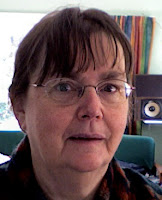
My recently-completed novel, Where the HeArt Is, having been turned down by all the New Zealand publishers I cared to submit it to, I think self-publishing. I self-published Take It Easy, a earlier novel as a print book and managed the process well, except for the dreaded self-promotion and marketing. At which I was a failure.
The advantages of publishing as an ebook, once you have an edited, proofread manuscript, as I see it, are:
1. Little or no upfront costs (depending on whether you do your own cover, layout and so on.)
2. Riding the wave (well, there are a lot of people saying there is one) of sales for ebook readers.
3. There are some online promotional options that seem to be accessible to individual authors. Some of these I can contemplate doing, others I can’t. (More on this is a later post.)
There are a lot of people writing on the web saying how easy it is to publish an ebook. Don’t be fooled. To do a proper job you have to do a lot of work. I’ve been cruising (as it were!) the web for some months now, gathering information about how to epublish and how to sell ebooks, some of it contradictory, some downright offensive (like spamming your friends), some useful.
I’m sure there will soon be, and probably are already, people who will do all this for an author, epublishing agents/ publishers if you like, for a fee or a percentage. I am not interested in a new career, but I do want to figure out how to do my own book/s, producing a quality book for all the major ereaders. (Amazon/Kindle has to be done separately, in usual Amazon restrictive style.)
(For a touch of visual interest, this is where I do most of my writing.)
I plan to use the aggregator (a way of distributing to all the main ebook sellers, except Amazon) Smashwords. I’ll write more about Smashwords in a later blog, but it’s worth checking out the author sections of their website at http://smashwords. com
Some not-so-obvious things I have discovered:
1. The US Inland Revenue Service (IRS) will take 30% of your earnings on US sales unless you jump through a whole bunch of hoops to get an IRS exemption number. Which you can do from New Zealand. I have a notarised copy of my passport from the US embassy in Auckland (no other sort will do) and am waiting for a letter (an email won’t do) from Smashwords so I can submit (by snail mail) an application to the IRS. I got the “how to” for this from Roz Morris’s blog, “Nail Your Novel” at https://nailyournovel.wordpress.com I am extremely grateful to Roz Morris for this information.
2. To get a good-looking ebook that is a pleasure to read on an ereading device it has to be formatted to very specific instructions. I am familiar with the Smashwords ones, for which you can get a free-to-download pdf from their webiste. Search for Style Guide on their website.
3. People who write about epublishing on the web write with authority, as though their information is accurate, sensible and up-to-date. Sometimes it is. You have to find websites etc with information you trust. This takes time, and is not as simple as me putting in here a list of ones I like: finding the ones that work for you is part of figuring out how to do this thing.
Maybe I am making more of a meal of this than is necessary. If that is the case, so be it. I’m kind of enjoying the trip.
This is number 1 of a series!
January 6, 2012
December 21, 2011
On Reading David Foster Wallace (&Terry Pratchett)
I don’t remember where I read references to DFW that made me want to read him. Two volumes—A Supposedly Fun Thing I’ll Never Do Again and Consider The Lobster—of his essay-type pieces later, I was glad I found him. He portrays his disgust (lobsters) and despair at what people do (that supposedly fun thing, going on a cruise) through accumulating detail and a particular way of writing from inside his consciousness. I like both, and imagine a lot of people don’t.
He uses some odd sentence constructions, like starting a sentence with “And but so…” which, until I got used to it, had me re-reading several times. He also uses some very long sentences.
In the short story collection, Oblivion, the consciousness he writes from inside of is his characters’, not overtly his own. This has a strangely bleak effect (affect?). In “Another Pioneer” the narrator is reporting a conversation he partially overheard on a United Airlines flight in patches of great detail. DFW does this a lot, gives great detail and then not much information—it’s hard to explain.
He seems to have a yen to convey boredom, presumably without being boring. He certainly doesn’t bore me. I’m sure my own interest in conveying everyday boredom arises from my experience of it as a child and young person. (I have seldom been bored in the last few decades.) The story “Mister Squishy” is wonderfully evocative of at least two sorts of boredom, one of being in a group being talked at, the other of presenting too-familiar material.
In “Good Old Neon” (which begins, “My whole life I’ve been a fraud.”) the narrator describes thinking about himself thinking about thinking. (I’m avoiding the phrase “stream of consciousness” because it seems to me what DFW is doing is different from that, but I can’t say how.) And this—thinking about himself thinking about thinking—reminds me, oddly, of Terry Pratchett’s The Wee Free Men, which I have just finished. In The Wee Free Men the protagonist, Tiffany, refers to her own ability to have first, second and third thoughts. The context and circumstances are where she is trying to hold on to her own, real, self in the face of a Queen who wants to put her in various dream spaces (yes, The Wee Free Men is one of 30+ books set in Pratchett’s fanstasy land, Discworld). Whereas DRW is concerned with solispsism, Tiffany is looking outwards by looking inwards. Or something. Anyway, one reminded me of the other.
Another thing DFW does with sentences is now and then make an ungrammatical statement, like, “The next time or next thing I wanted.” These sentences are placed, carefully, I suspect, as a kind of summary—or extension—of what precedes them.
The phrase “the loneliness of solipsism” comes into my mind as I write and I am not sure whether is it my phrase or one I came across reading about DFW before I started to read him. This in itself was unusual for me, I generally prefer to read an author before I look at others’ opinions, but I had accidentally come across descriptions of his writing as “difficult,” “challenging,” and so on, so decided some preparation was in order.
When I finish the short stories, it’s on to his novel, Infinite Jest. A novel with 388 footnotes. Did I mention DFW excels at asides?
He uses some odd sentence constructions, like starting a sentence with “And but so…” which, until I got used to it, had me re-reading several times. He also uses some very long sentences.
In the short story collection, Oblivion, the consciousness he writes from inside of is his characters’, not overtly his own. This has a strangely bleak effect (affect?). In “Another Pioneer” the narrator is reporting a conversation he partially overheard on a United Airlines flight in patches of great detail. DFW does this a lot, gives great detail and then not much information—it’s hard to explain.
He seems to have a yen to convey boredom, presumably without being boring. He certainly doesn’t bore me. I’m sure my own interest in conveying everyday boredom arises from my experience of it as a child and young person. (I have seldom been bored in the last few decades.) The story “Mister Squishy” is wonderfully evocative of at least two sorts of boredom, one of being in a group being talked at, the other of presenting too-familiar material.
In “Good Old Neon” (which begins, “My whole life I’ve been a fraud.”) the narrator describes thinking about himself thinking about thinking. (I’m avoiding the phrase “stream of consciousness” because it seems to me what DFW is doing is different from that, but I can’t say how.) And this—thinking about himself thinking about thinking—reminds me, oddly, of Terry Pratchett’s The Wee Free Men, which I have just finished. In The Wee Free Men the protagonist, Tiffany, refers to her own ability to have first, second and third thoughts. The context and circumstances are where she is trying to hold on to her own, real, self in the face of a Queen who wants to put her in various dream spaces (yes, The Wee Free Men is one of 30+ books set in Pratchett’s fanstasy land, Discworld). Whereas DRW is concerned with solispsism, Tiffany is looking outwards by looking inwards. Or something. Anyway, one reminded me of the other.
Another thing DFW does with sentences is now and then make an ungrammatical statement, like, “The next time or next thing I wanted.” These sentences are placed, carefully, I suspect, as a kind of summary—or extension—of what precedes them.
The phrase “the loneliness of solipsism” comes into my mind as I write and I am not sure whether is it my phrase or one I came across reading about DFW before I started to read him. This in itself was unusual for me, I generally prefer to read an author before I look at others’ opinions, but I had accidentally come across descriptions of his writing as “difficult,” “challenging,” and so on, so decided some preparation was in order.
When I finish the short stories, it’s on to his novel, Infinite Jest. A novel with 388 footnotes. Did I mention DFW excels at asides?
November 20, 2011
Recent Reading
In my last post, I promised another one soon about some of what I have been reading. Here it is.
I’ve had a Henry James jag, reading four of his twenty or so novels. Portrait of A Lady was my first read and my favourite. Isabel, its protagonist, wants to be an independent, free-thinking woman and to be good, by her own lights, which means authentic and real. Of course this is doomed in the long term. But how interesting for a protagonist of that time (pre WWI) in a book by a man to be so concerned with her own identity. This carries into The Wings of the Dove, about another independent, rich woman, this one ill.
The protagonist in The Ambassadors is male, though concerns with authentic identity, and an authorial focus on introspection rather than plot, remain. There is plenty of plot in all these books, but it is almost secondary to the characters’ thoughts about themselves, their motivations and their relationships. The same applies to The Spoils of Poynton, the fourth book of my James-jag. Of course, he is much studied and discussed in sophisticated ways I don’t even touch on here, and he writes beautiful sentences.
I think Julian Barnes’ The Sense of an Ending is a worthy winner of this year’s Man Booker Prize.
It’s a novel that deals with the complexities of memory, and how we reinvent and reinterpret our past actions. It’s beautifully written. I hadn’t read any Julian Barnes before and now I will.
Carol Birch’s Jamrach’s Menagerie was also short-listed for the Man Booker. It’s a good read, but harrowing in the gruesome details of harpoon-whaling and a long lost-at-sea stretch . Jaffy, in whose voice the story is told, is on the whaling ship as one of a small group of men seeking exotic animals for wealthy collectors in England at the time.
Michael Ondaatje’s The Cat’s Table is set largely at sea, and is written from the point of view of a young person, but those are the only similarities with Jamrach.
Three unaccompanied boys meet by being sat on a passenger ship’s most lowly dining table on a voyage from (then) Ceylon to England. The story is told by Michael, looking back. There are flashes forward to his later life, but the action of the story takes place on the ship. Great writing, great characterisations, great insights from the point of view of the young Michael.
My son lent me The Watchmen, a (mostly) graphic novel (is that the right word?) written by Alan Moorhead, with visuals by Dave Gibbons and John Higgins, first published by DC comics in 1986. This is satire at its best.
I had to concentrate hard to follow what was going on, but it was worth the effort. Graphic novels require a different kind of reading from straight text. I’m not sure what exactly that difference is, and have never read anything about it, but suspect it’s got something to do with paying as much attention to the images, and how they are arranged, as to the words.
I picked up Marilynne Robinson’s Absence of Mind because I so admire her novels. Absence of Mind consists of four essays in which she argues, more elegantly than I can say it, that “mind” (introspection, belief, self-consciousness and so on) is more than “brain”. It’s a dense and fascinating read. She argues for “…the odd privilege of existence as a coherent self, the ability to speak the word ‘I’ and mean by it a richly individual history of experience, perception and though.”
There is, she says, a human mind and consciousness that is more than can be described by closer and closer descriptions of the human brain. This is a fascinating book that I will read again.
Over the summer, I plan to read David Foster Wallace.
I’ve had a Henry James jag, reading four of his twenty or so novels. Portrait of A Lady was my first read and my favourite. Isabel, its protagonist, wants to be an independent, free-thinking woman and to be good, by her own lights, which means authentic and real. Of course this is doomed in the long term. But how interesting for a protagonist of that time (pre WWI) in a book by a man to be so concerned with her own identity. This carries into The Wings of the Dove, about another independent, rich woman, this one ill.
The protagonist in The Ambassadors is male, though concerns with authentic identity, and an authorial focus on introspection rather than plot, remain. There is plenty of plot in all these books, but it is almost secondary to the characters’ thoughts about themselves, their motivations and their relationships. The same applies to The Spoils of Poynton, the fourth book of my James-jag. Of course, he is much studied and discussed in sophisticated ways I don’t even touch on here, and he writes beautiful sentences.
I think Julian Barnes’ The Sense of an Ending is a worthy winner of this year’s Man Booker Prize.
It’s a novel that deals with the complexities of memory, and how we reinvent and reinterpret our past actions. It’s beautifully written. I hadn’t read any Julian Barnes before and now I will.
Carol Birch’s Jamrach’s Menagerie was also short-listed for the Man Booker. It’s a good read, but harrowing in the gruesome details of harpoon-whaling and a long lost-at-sea stretch . Jaffy, in whose voice the story is told, is on the whaling ship as one of a small group of men seeking exotic animals for wealthy collectors in England at the time.
Michael Ondaatje’s The Cat’s Table is set largely at sea, and is written from the point of view of a young person, but those are the only similarities with Jamrach.
Three unaccompanied boys meet by being sat on a passenger ship’s most lowly dining table on a voyage from (then) Ceylon to England. The story is told by Michael, looking back. There are flashes forward to his later life, but the action of the story takes place on the ship. Great writing, great characterisations, great insights from the point of view of the young Michael.
My son lent me The Watchmen, a (mostly) graphic novel (is that the right word?) written by Alan Moorhead, with visuals by Dave Gibbons and John Higgins, first published by DC comics in 1986. This is satire at its best.
I had to concentrate hard to follow what was going on, but it was worth the effort. Graphic novels require a different kind of reading from straight text. I’m not sure what exactly that difference is, and have never read anything about it, but suspect it’s got something to do with paying as much attention to the images, and how they are arranged, as to the words.
I picked up Marilynne Robinson’s Absence of Mind because I so admire her novels. Absence of Mind consists of four essays in which she argues, more elegantly than I can say it, that “mind” (introspection, belief, self-consciousness and so on) is more than “brain”. It’s a dense and fascinating read. She argues for “…the odd privilege of existence as a coherent self, the ability to speak the word ‘I’ and mean by it a richly individual history of experience, perception and though.”
There is, she says, a human mind and consciousness that is more than can be described by closer and closer descriptions of the human brain. This is a fascinating book that I will read again.
Over the summer, I plan to read David Foster Wallace.
November 12, 2011
A writing fragment that grew, and the work of self-publishing
The writing ideas that come to me lately are fragments, bits that don’t seem to go anywhere. Most of them get written down somewhere, so maybe one day some of them will come to life and grow. A fragment that grew into something, I think, is at the end of this blog entry. It’s called Sentences, and might well end up in the collection I am making, that might be called, Stones Gathered Together.
With the help of my friend Jill, I have devised something that might do as a cover for the ebook version of my finished novel, Where the HeArt is.
I’m still gathering permissions for using the quotes in that book. And the copyholders of A A Milne’s material said, “No.” I can’t use three lines from his poem “Disobedience” because, as they say in their letter, “The Trustees for the Estate of Milne feel strongly that quotes for the poems should be restricted to matters directly relating to children or in children’s literature.” This is the first time I have been turned down. Other copyright holders (most notably for Emily Dickinson) wanted to be paid rather a lot for quoting two lines, in an earlier book, so I changed the quote. In Where the HeArt Is I refer to ED’s poems, but don’t quote any directly.
Because there are a number of references to works of visual art in Where the HeArt Is, and because I don’t have the resources to either get permission to reproduce them or print them, I have put a list of where each one can be found on the internet at the back of the book. In the ebook version, this is hyperlinked to the text.
I am about halfway through the formatting needed to upload the book to Smashwords, which is a vehicle to get books distributed to all the major ebook retailers except Amazon. There is a way to get onto Amazon’s Kindle listing, but I haven’t sorted that out yet. And then there is the business of accepting that one third of anything I earn from online sales will go to the US tax department, or going through a daunting process to get an exemption, as someone who does not live in the US. There’s a great deal of work in self-publishing! Then there are blurbs to write, and online "marketing" to figure.... I have dome some work on how to let people know my book is there online. More of that in a later post.
There is also a whole lot of reading going on in my life. I’ll put some of that in a separate post. Soon.
Here's the fragment that grew:
Sentences
This is a sentence. Do not pass go. Do not collect $200.
Full stop. (Fool, stop!) The noun, the name, is the anchor, the key. The article tells us it’s one. Solitary. A verb is existence or action.
(‘Is’ is bang in the middle of prison.)
‘This’ is a word. Not naming but definite. This, not that. This only. This ‘this’ only. Contains ‘is’. Existence contains ‘is,’ appropriately. ‘Lives’ contains ‘is,’ only with some rearrangement. Gone, dead, death, no ‘is’ in there. Gone has ‘no’, or strictly speaking ‘on’. ‘No’ is ‘on’ backwards but can you go backwards from gone? But finished has ‘is.’ You can take any idea too far.
‘I am’, said Descartes and McCahon and no doubt many others. Well, me too. I write this, therefore I am. If I don’t write this it doesn’t prove anything.
Gertrude Stein wrote ‘Rose is a rose is a rose’ in a poem. In this line, the first ‘Rose’ is purported to be a person. Later, she wrote, ‘A rose is a rose is a rose,’ which, according to Wikipedia, ‘is often interpreted as meaning “things are what they are,” a statement of the law of identity.’ Later again, in Four In America, she said, ‘Now listen! I’m no fool. I know that in daily life we don’t go around saying “is a … is a … is a …” Yes, I’m no fool; but I think in that line the rose is red for the first time in English poetry for a hundred years.’
With Gertrude it’s hard to tell exactly what she meant, you have to ride along with her sentences, waiting for the occasional sense of something to float into your mind. She wrote: ‘I really do not know that anything has ever been more exciting than diagramming sentences,’ (And had a passion for the full-stop.) Gertrude wrote about paragraphs as well as sentences, which is getting way too complicated.
‘To be or not to be [a mother] that is the question.’ And a sentence. Either way, in the end, you have to live with it. And, either way, it’s a life sentence.
With the help of my friend Jill, I have devised something that might do as a cover for the ebook version of my finished novel, Where the HeArt is.
I’m still gathering permissions for using the quotes in that book. And the copyholders of A A Milne’s material said, “No.” I can’t use three lines from his poem “Disobedience” because, as they say in their letter, “The Trustees for the Estate of Milne feel strongly that quotes for the poems should be restricted to matters directly relating to children or in children’s literature.” This is the first time I have been turned down. Other copyright holders (most notably for Emily Dickinson) wanted to be paid rather a lot for quoting two lines, in an earlier book, so I changed the quote. In Where the HeArt Is I refer to ED’s poems, but don’t quote any directly.
Because there are a number of references to works of visual art in Where the HeArt Is, and because I don’t have the resources to either get permission to reproduce them or print them, I have put a list of where each one can be found on the internet at the back of the book. In the ebook version, this is hyperlinked to the text.
I am about halfway through the formatting needed to upload the book to Smashwords, which is a vehicle to get books distributed to all the major ebook retailers except Amazon. There is a way to get onto Amazon’s Kindle listing, but I haven’t sorted that out yet. And then there is the business of accepting that one third of anything I earn from online sales will go to the US tax department, or going through a daunting process to get an exemption, as someone who does not live in the US. There’s a great deal of work in self-publishing! Then there are blurbs to write, and online "marketing" to figure.... I have dome some work on how to let people know my book is there online. More of that in a later post.
There is also a whole lot of reading going on in my life. I’ll put some of that in a separate post. Soon.
Here's the fragment that grew:
Sentences
This is a sentence. Do not pass go. Do not collect $200.
Full stop. (Fool, stop!) The noun, the name, is the anchor, the key. The article tells us it’s one. Solitary. A verb is existence or action.
(‘Is’ is bang in the middle of prison.)
‘This’ is a word. Not naming but definite. This, not that. This only. This ‘this’ only. Contains ‘is’. Existence contains ‘is,’ appropriately. ‘Lives’ contains ‘is,’ only with some rearrangement. Gone, dead, death, no ‘is’ in there. Gone has ‘no’, or strictly speaking ‘on’. ‘No’ is ‘on’ backwards but can you go backwards from gone? But finished has ‘is.’ You can take any idea too far.
‘I am’, said Descartes and McCahon and no doubt many others. Well, me too. I write this, therefore I am. If I don’t write this it doesn’t prove anything.
Gertrude Stein wrote ‘Rose is a rose is a rose’ in a poem. In this line, the first ‘Rose’ is purported to be a person. Later, she wrote, ‘A rose is a rose is a rose,’ which, according to Wikipedia, ‘is often interpreted as meaning “things are what they are,” a statement of the law of identity.’ Later again, in Four In America, she said, ‘Now listen! I’m no fool. I know that in daily life we don’t go around saying “is a … is a … is a …” Yes, I’m no fool; but I think in that line the rose is red for the first time in English poetry for a hundred years.’
With Gertrude it’s hard to tell exactly what she meant, you have to ride along with her sentences, waiting for the occasional sense of something to float into your mind. She wrote: ‘I really do not know that anything has ever been more exciting than diagramming sentences,’ (And had a passion for the full-stop.) Gertrude wrote about paragraphs as well as sentences, which is getting way too complicated.
‘To be or not to be [a mother] that is the question.’ And a sentence. Either way, in the end, you have to live with it. And, either way, it’s a life sentence.
Labels:
marketing a book,
permissions,
self-publishing,
writing
October 3, 2011
On my way to an ebook
I’m getting to grips with Goodreads, really, I am. Other people seem to find their way around these sites with ease and aplomb, while I stumble along trying to figure out what a “friends” are in this context, and do I want them.
Puddling around on the net looking at ways to promote an ebook leaves me with a feeling that thousands of us, looking to find readers for our book—preferably paying readers—are circulating the same information over and over again, with varying levels of gee-whiz type hype. As each of us is probably a reader we are our own audience. Why do I get a picture of snakes swallowing their owntails?
What about readers who don’t write? (I know there are some.) They don’t have the same motivation to make their presence known. What’s the point of setting oneself a “challenge” to read x books by the end of the year? Or having books you might like selected by an algorithm, based on what you’ve read before? I guess it’s a variation on browsing in the bookshop or library.
I have finally made the decision that I will publish Where the HeArt Is as an ebook as soon as I get it ready and do a print version next year. I’ll use Smashwords — known as an aggregator site, because it distributes ebooks to a whole lot of different outlets — because I know how to do that, and how to format a book to their requirements. Am gathering permissions to quote from various poets.
And it’s a fiction book, a novel, not a [name your genre] novel; my impatience with the genre-focus of a lot of internet material on publishing continues.
I’m going to mention only one book I’ve read recently,and that's Sorry by Gail Jones. It sat on my to-be-read pile for ages. It’s a terrific Australian novel about some well-drawn characters. Their lives, in northern West Australia mainly, are hard and tragic, but it’s a compelling read. One of the aspects I really liked about this book is that the social context is there, hovering in the background, unmistakable, but the story concerns the characters and their lives. It does not preach.
Puddling around on the net looking at ways to promote an ebook leaves me with a feeling that thousands of us, looking to find readers for our book—preferably paying readers—are circulating the same information over and over again, with varying levels of gee-whiz type hype. As each of us is probably a reader we are our own audience. Why do I get a picture of snakes swallowing their owntails?
What about readers who don’t write? (I know there are some.) They don’t have the same motivation to make their presence known. What’s the point of setting oneself a “challenge” to read x books by the end of the year? Or having books you might like selected by an algorithm, based on what you’ve read before? I guess it’s a variation on browsing in the bookshop or library.
I have finally made the decision that I will publish Where the HeArt Is as an ebook as soon as I get it ready and do a print version next year. I’ll use Smashwords — known as an aggregator site, because it distributes ebooks to a whole lot of different outlets — because I know how to do that, and how to format a book to their requirements. Am gathering permissions to quote from various poets.
And it’s a fiction book, a novel, not a [name your genre] novel; my impatience with the genre-focus of a lot of internet material on publishing continues.
I’m going to mention only one book I’ve read recently,and that's Sorry by Gail Jones. It sat on my to-be-read pile for ages. It’s a terrific Australian novel about some well-drawn characters. Their lives, in northern West Australia mainly, are hard and tragic, but it’s a compelling read. One of the aspects I really liked about this book is that the social context is there, hovering in the background, unmistakable, but the story concerns the characters and their lives. It does not preach.
August 29, 2011
To sell or not to sell, is that the question?
I’m gathering information about marketing using online resources as preparation for self-publishing my novel, Where The HeArt Is early next year. This has me thinking about the whole business of marketing and promotion, which I made such a bad job of with my earlier novel, Take It Easy. Now that I have a better idea of what I hate about marketing and what I will never get around to doing, I’m working towards a plan.
As I will publish a very small print run and an ebook simulaneously, a lot of the publicity will be on line, and that means using the dreaded social media. Facebook, aaarrggh! I hate facebook. I’m certainly not going to dump daily book promotion on my facebook ‘friends,’ nor am I going to send a barrage of emails to everyone on my contacts list.
There are all kinds of alternatives, such as using readers’ sites like Goodreads and Librarything and I’m teaching myself about them. And there’s something called a ‘blog tour’ which involves getting other blog writers, who write for readers, to ‘interview’ me on their blog about my book. Or write a review on their blog.
There’s a wealth of ‘how to market your book’ information out there on the web, a lot of it obvious, some objectionable and none delivering magic bullets. Some of it is free, but a number of the people offering it are writers wanting to expand their income stream. Fair enough, but I haven’t found any online course or publication on book promotion that I wanted to buy yet. I’m after some good evidence that the advice on sale has something to offer that I haven’t worked out for myself or read in three other places, before I spend any money.
There’s a big focus in a lot of the material on marketing on identifying a genre and then the audience for that genre. I write fiction. I suppose you could say adult fiction, though there’s nothing “adult” about it. Fantasy, romance, young adult, crime, horror, the categories of genre abound. My book is a novel. I don’t want to be a genre. "Literary fiction" seems pretentious, other qualifiers of fiction just don’t fit.
On the reading front, I am pleased to have finished The Brothers Karamazov.
I’m not sorry to have read it, but I did find it a bit of a slog. Three brothers, not to mention a bunch of other characters, anguishing about themselves, their humiliations, whether or not they love or hate this or that person, and their place in society and rushing in and out of rooms, wrathfully, or in some kind of despair, on urgent business they may or may not get to in the next few chapters ……. There are some fascinating themes; for example, whether people can be "good" without belief in a God and an afterlife. Many times as I read I thought of another writer, or a contemporary situation that Dostoevsky could be referencing. “I think it’s better to get acquainted before parting,” made me think of Gertrude Stein. And, “If everything on earth were sensible, nothing would happen,” reminded me of every television series or soap I ever watched.
Kathleen Jones’s Katherine Mansfield: The Story-Teller
is a tour de force of a biography. It’s a full and fascinating tale of KM’s life and writing. Her writing of course lives on after her, and Kathleen Jones spends some later chapters examining what happened to her writings after her death. John Middleton Murry was unbelievably mean about money while KM was alive and self-serving in his productions from her unpublished writings. There’s a different portrayal of KM’s relationship with Ida Baker from any I have read previously. Ida was the one who most reliably cared for KM in her illness, even if she often did it ineptly. Steadfast is the word that comes to mind. I liked the way Kathleen Jones ended this book; a lot of it is necessarily concerned with KM’s ill-health, but at the very end KM exits her story as a writer.
I may have to give up reading David Vann, his books are so bleak. The harshness of the Alaskan landscape he sets his novels in is one thing, the terrible, gut-wrenching awfulness of the relationships among his characters is too much. Caribou Island is beautifully written, and the characters are totally convincing and so, so hopeless. One character muses, “…in the end you feel what you feel. You don’t get a choice. You don’t get to remake yourself from the beginning. You can’t put a life back together in a different way.” I agree with this, but in the context of Caribou Island it becomes just too fatalistic.
I don’t know what I’m going to read next, which is unusual. Not that I’m panicked about this, I have several piles to choose from.
As I will publish a very small print run and an ebook simulaneously, a lot of the publicity will be on line, and that means using the dreaded social media. Facebook, aaarrggh! I hate facebook. I’m certainly not going to dump daily book promotion on my facebook ‘friends,’ nor am I going to send a barrage of emails to everyone on my contacts list.
There are all kinds of alternatives, such as using readers’ sites like Goodreads and Librarything and I’m teaching myself about them. And there’s something called a ‘blog tour’ which involves getting other blog writers, who write for readers, to ‘interview’ me on their blog about my book. Or write a review on their blog.
There’s a wealth of ‘how to market your book’ information out there on the web, a lot of it obvious, some objectionable and none delivering magic bullets. Some of it is free, but a number of the people offering it are writers wanting to expand their income stream. Fair enough, but I haven’t found any online course or publication on book promotion that I wanted to buy yet. I’m after some good evidence that the advice on sale has something to offer that I haven’t worked out for myself or read in three other places, before I spend any money.
There’s a big focus in a lot of the material on marketing on identifying a genre and then the audience for that genre. I write fiction. I suppose you could say adult fiction, though there’s nothing “adult” about it. Fantasy, romance, young adult, crime, horror, the categories of genre abound. My book is a novel. I don’t want to be a genre. "Literary fiction" seems pretentious, other qualifiers of fiction just don’t fit.
On the reading front, I am pleased to have finished The Brothers Karamazov.
I’m not sorry to have read it, but I did find it a bit of a slog. Three brothers, not to mention a bunch of other characters, anguishing about themselves, their humiliations, whether or not they love or hate this or that person, and their place in society and rushing in and out of rooms, wrathfully, or in some kind of despair, on urgent business they may or may not get to in the next few chapters ……. There are some fascinating themes; for example, whether people can be "good" without belief in a God and an afterlife. Many times as I read I thought of another writer, or a contemporary situation that Dostoevsky could be referencing. “I think it’s better to get acquainted before parting,” made me think of Gertrude Stein. And, “If everything on earth were sensible, nothing would happen,” reminded me of every television series or soap I ever watched.
Kathleen Jones’s Katherine Mansfield: The Story-Teller
is a tour de force of a biography. It’s a full and fascinating tale of KM’s life and writing. Her writing of course lives on after her, and Kathleen Jones spends some later chapters examining what happened to her writings after her death. John Middleton Murry was unbelievably mean about money while KM was alive and self-serving in his productions from her unpublished writings. There’s a different portrayal of KM’s relationship with Ida Baker from any I have read previously. Ida was the one who most reliably cared for KM in her illness, even if she often did it ineptly. Steadfast is the word that comes to mind. I liked the way Kathleen Jones ended this book; a lot of it is necessarily concerned with KM’s ill-health, but at the very end KM exits her story as a writer.
I may have to give up reading David Vann, his books are so bleak. The harshness of the Alaskan landscape he sets his novels in is one thing, the terrible, gut-wrenching awfulness of the relationships among his characters is too much. Caribou Island is beautifully written, and the characters are totally convincing and so, so hopeless. One character muses, “…in the end you feel what you feel. You don’t get a choice. You don’t get to remake yourself from the beginning. You can’t put a life back together in a different way.” I agree with this, but in the context of Caribou Island it becomes just too fatalistic.
I don’t know what I’m going to read next, which is unusual. Not that I’m panicked about this, I have several piles to choose from.
August 5, 2011
With a knee operation and subsequent bad reaction to medications behind me, I am now back to reading and at least thinking about writing and publishing.
I'm stumbling along with The Brothers Karamazov, finding it, well, overwrought. Am also noticing how contemporary some of its concerns are and actually improving my understanding of what christianity/religion can mean to people, mainly through the character of Alyosha, the youngest brother. So I’m far from giving up on it, but reading other things alongside.
Re-reading Sarah Bakewell’s How To Live: A Life of Montaigne, is a delight. Bakewell is most impressive in the way she brings together historical context, what is known of Montaingne’s life, his reading and influences, and of course the ideas in his Essays. His ideas about how to live are worth thinking about, though at times I get annoyed with them.
J.M.Coetzee’s Diary of A Bad Year runs three versions of itself across the pages. Along the bottom of each page, separated by a thin line, is the story of a (not overtly sexual) relationship between an aging author and a woman in the same apartment block who types up the manuscript of a collection of thoughts he is writing. Starting a little way into the book is another stream, from the woman’s point of view. Across the top half - and more - of each page are the ‘thoughts’ of the author. I decided to read one strand at a time, starting from the one at the bottom of the pages, and this worked for me. As did the whole book. I admired it and enjoyed reading it and found the ideas of the short essays interesting, particularly the early ones about the state and the succession of power.
I’m finding it hard to think about the publishing of the new novel. There’s still a little editing to do, but that’s no reason to not at least settle on the beginnings of a plan. (Made a phone call to a friend, got more energised, watch this space.)
It seems a long time since I wrote anything new. There are a couple of ideas in there somewhere, I need to shake them out and see if they go anywhere, which means settling down at the computer and getting some words down.
I have written up the China travels, with photos, and put the file up on the web. You can access it at
http://dl.dropbox.com/u/766517/ChinaTripDB.pdf
without having to sign up for anything or identify yourself.
Tian'an Men Square, Beijing.
There’s no way to comment, if you want to make a comment come back to this blog or email me.
I'm stumbling along with The Brothers Karamazov, finding it, well, overwrought. Am also noticing how contemporary some of its concerns are and actually improving my understanding of what christianity/religion can mean to people, mainly through the character of Alyosha, the youngest brother. So I’m far from giving up on it, but reading other things alongside.
Re-reading Sarah Bakewell’s How To Live: A Life of Montaigne, is a delight. Bakewell is most impressive in the way she brings together historical context, what is known of Montaingne’s life, his reading and influences, and of course the ideas in his Essays. His ideas about how to live are worth thinking about, though at times I get annoyed with them.
J.M.Coetzee’s Diary of A Bad Year runs three versions of itself across the pages. Along the bottom of each page, separated by a thin line, is the story of a (not overtly sexual) relationship between an aging author and a woman in the same apartment block who types up the manuscript of a collection of thoughts he is writing. Starting a little way into the book is another stream, from the woman’s point of view. Across the top half - and more - of each page are the ‘thoughts’ of the author. I decided to read one strand at a time, starting from the one at the bottom of the pages, and this worked for me. As did the whole book. I admired it and enjoyed reading it and found the ideas of the short essays interesting, particularly the early ones about the state and the succession of power.
I’m finding it hard to think about the publishing of the new novel. There’s still a little editing to do, but that’s no reason to not at least settle on the beginnings of a plan. (Made a phone call to a friend, got more energised, watch this space.)
It seems a long time since I wrote anything new. There are a couple of ideas in there somewhere, I need to shake them out and see if they go anywhere, which means settling down at the computer and getting some words down.
I have written up the China travels, with photos, and put the file up on the web. You can access it at
http://dl.dropbox.com/u/766517/ChinaTripDB.pdf
without having to sign up for anything or identify yourself.
Tian'an Men Square, Beijing.
There’s no way to comment, if you want to make a comment come back to this blog or email me.
Subscribe to:
Posts (Atom)